- LevelIntermediate
- Time4-6 hours
- YarnFingering
About This Pattern
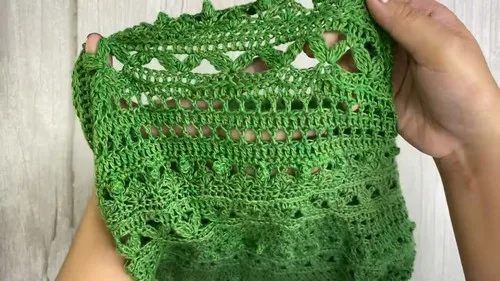
This shawl has that open, breezy feeling you want for a piece you'll actually reach for. It's all long chain spaces and double crochet columns, so the fabric has air moving through it. Nothing fussy, nothing fringed with a hundred ends to weave in.
Your hands settle into a rhythm here: chain, skip, double crochet, chain, skip, double crochet. Once row one is behind you, the rest is muscle memory, which makes this a good project for the couch or a long phone call. The chainless starting double crochet takes a few tries to feel natural, then it clicks.
Draped over the back of a chair, this shawl reads as a soft rectangle of texture rather than a blanket. Thrown over one shoulder, it moves with you instead of sitting stiff. It's the kind of piece that looks just as good folded on an armrest as it does worn.
- Chain a long foundation in multiples of six plus one to set the shawl's eventual width.
- Work a double crochet into every chain stitch across that foundation to lock in your stitch count.
- Begin each new row with a chainless starting double crochet instead of a turning chain.
- Repeat the chain-one, skip-one, double-crochet sequence across the row to build the open mesh pattern.
- Keep stacking identical mesh rows until the rectangle reaches the length you want.
- Check every few rows that your stitch count is still landing on a multiple of six plus one.
- Weave in your ends with a yarn needle once the final row is complete.
On the desk
- Eight ply fine cotton fingering weight yarn
- 3.75 millimeters crochet hook (for shawl) or 4.5 millimeters crochet hook (in tutorial)
- Yarn needle
Stitch shorthand
- ch — chain
- st — stitch
- sl st — slip stitch
- sc — single crochet
- dc — double crochet
- tr — treble crochet
- fo — finish off
Simple rectangular mesh shawl in double crochet
Steps
Foundation Chain: Chain in multiples of six plus one. (For example: 318 chains for a 60-inch shawl)
Make a slip knot and chain in sets of six: 1, 2, 3, 4, 5, 6...
- Row 1
Chain one (does not count as a stitch) Double crochet in each chain stitch from the foundation chainStep by step: Total stitches should be in multiples of six plus one.
- Row 2
Start with a chainless starting double crochet in the first stitch Repeat: Chain one, skip one stitch, double crochet in the next stitch
- Row 3
Double crochet in each stitch from the previous row
- Row 4
Chainless starting double crochet in first stitch Unique stitch (similar to a front post double crochet but different) in each stitch
- Row 5
Chainless starting double crochet Create sets of three treble crochets clusters with chain one spaces in between End the row with a cluster and a slip stitch
- Row 6
Chain one, single crochet along the edge between clusters Chain three, single crochet in the top of each cluster Chain three, single crochet between clusters
- Row 7
Starting with a double crochet, repeat three double crochets in each chain space and a double crochet in each single crochet
- Row 8
Begin with a chainless starting double crochet Repeat: Unique stitch in the first stitch, double crochet in the following stitches
- Rows 9–13
Repeat stitch patterns, including treble crochet clusters, single crocheting, and unique stitches where applicable
- Row 14
Repeat the chain, skip, and double crochet pattern
- Row 15
Single crochet in each stitchRepeat: After row 15, repeat from Row 2 to Row 15 as desired for the shawl size.
After completing your desired number of rows for the shawl, add an edging for a polished look.
Edging You can choose to continue with the same stitch pattern used throughout the shawl or select a different edging pattern for a decorative touch.
Bind Off Once you are satisfied with the size and design of your shawl, cut the yarn, leaving a tail for weaving in.
Fasten off the last stitch securely and weave in any remaining yarn tails using a yarn needle to secure them neatly.
More shots
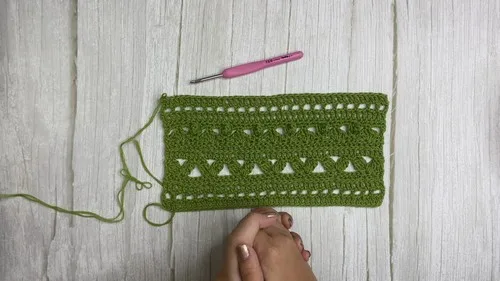
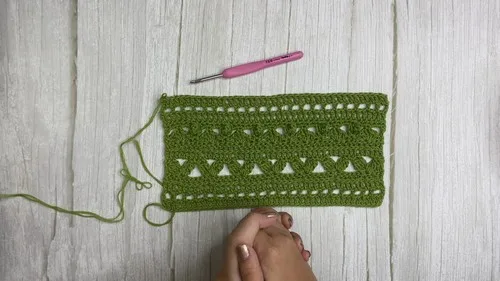
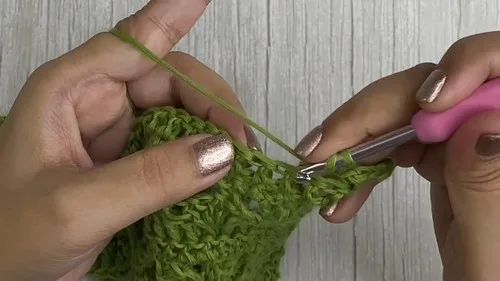
Where it goes
- Drape it over a plain sweater or dress to add texture without extra bulk.
- Keep it folded in a bag as a light layer for air-conditioned offices or evening patios.
- Use it as a soft throw across a reading chair, paired with a solid-color cushion.
- Wear it as a scarf-style wrap over a denim jacket for a dressed-up casual look.
Care
Hand wash this piece in cool water since fine cotton fingering yarn can lose its softness under hot water or heavy machine agitation.
Lay it flat on a towel to dry and gently reshape the rectangle while damp so the mesh pattern blocks out evenly.
Store it folded rather than hung, since cotton has little stretch recovery and hanging can pull the mesh out of shape over time.
Easy to get wrong
Losing the multiple of six plus
Count your foundation chain in groups of six as you go and check the plus-one stitch at the end before starting row one.
Turning chain instead of chainless start
Resist adding a chain before the first double crochet of a new row; work the chainless starting double crochet directly into that first stitch instead.
Skipping the wrong stitch in the mesh repeat
Say the sequence out loud as you work it: chain one, skip one, double crochet in the next, so you don't accidentally skip two or none.
Between the songs
- The satisfaction here is in the mesh itself: a simple chain-one, skip-one, double-crochet repeat that builds an open lattice without any complicated stitch counting. Once you're past the foundation row, every row reads the same, so you can watch the fabric grow fast. The chainless starting double crochet at the edge of each row is the one technical skill worth practicing, and getting it smooth gives the whole shawl a cleaner, more finished edge than a turning chain would. Working in fine cotton fingering yarn also means the drape stays light instead of heavy, so the finished rectangle moves like fabric, not a blanket. It's a pattern that rewards patience with yardage, not difficulty.
Listener questions
Why does the pattern use a chainless starting double crochet instead of a regular turning chain?
It keeps the side edges of the shawl looking neater and more consistent than a chain-three turning edge would. It takes a few rows to feel natural, but it becomes automatic quickly.
Can I use the 4.5 millimeter hook listed for the tutorial instead of the 3.75 millimeter hook?
The 3.75 millimeter hook is what's specified for the actual shawl, giving a firmer mesh with the fingering weight cotton. The 4.5 millimeter hook is there for tutorial purposes, so stick with 3.75 millimeters for your finished piece.
How do I know if I've chained the right number for my desired width?
Your total needs to land on a multiple of six plus one, like the 318-chain example given for a 60-inch shawl. Count in sets of six and add that final extra stitch at the end.
Why is my mesh looking uneven from row to row?
This usually means the chain-one, skip-one, double-crochet repeat is sliding by a stitch somewhere in the row. Lay the piece flat and check that your double crochets are landing in the same stitch pattern as the row below.
Is fine cotton fingering yarn a good choice for this open mesh design?
Yes, the lighter weight keeps the finished rectangle drapey instead of stiff, which suits the open chain spaces well. Cotton also holds its shape nicely once blocked, so the mesh stays even.
Original pattern: https://crocheteverything.com/shake-up-your-style-with-crochet-salvie-rectangular-shawl-tutorial-for-beginners/
About the Author

Marisol QuinteroWho runs Crochet Obsessed, why a stitch count sits at the end of every round, how a pattern gets written here, and the things this site will never do.
More Patterns
- IntermediateNo. 01

Rose Granny Square Tote Crochet Pattern
Rose granny square tote crochet pattern made from 18 dimensional rose squares for a sturdy, romantic everyday bag.
- IntermediateNo. 02
Tropical octopus baby blanket crochet pattern with appliqués
Tropical octopus baby blanket crochet pattern: a cream filet base with coral and turquoise octopus appliqués, leaves, and…
- IntermediateNo. 03
Sunny lemon couple amigurumi crochet pattern
Sunny lemon couple amigurumi crochet pattern with embroidered slices and safety eyes for a cheerful handmade shelf pair.