- LevelIntermediate
- Time4-6 hours
- Hook2.00 mm
- YarnDK
About This Pattern
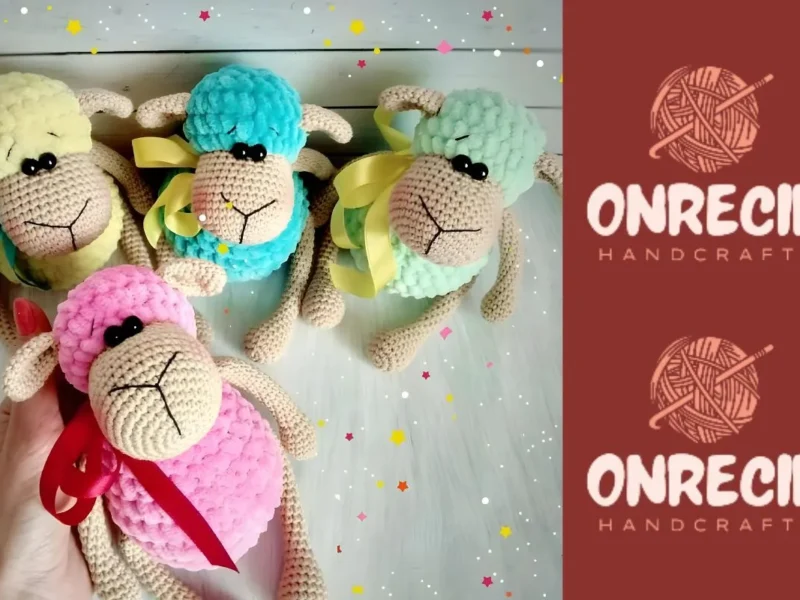
There is something quietly cheerful about a little sheep taking shape under your hook. This piece has that soft, barnyard sweetness, the kind of make that feels gentle rather than flashy. It is small enough to finish in a weekend and warm enough in character to feel like a keepsake the moment the last stitch closes.
Once it is stuffed and standing, this sheep settles happily on a windowsill, a bookshelf, or the corner of a child's bed. It has that compact, huggable presence that does not demand space but still catches the eye. It looks equally at home alone or lined up with other handmade animals.
- Begin each leg with a tight little ring of single crochet worked in the round to form the foot.
- Increase steadily around that ring so the leg widens into its fuller shape before settling down.
- Work several plain rounds of single crochet to build the straight middle section of the leg.
- Decrease back down near the top so the leg narrows enough to attach neatly to the body.
- Repeat the whole leg a second time so the sheep has a matching pair to stand on.
- Shape the small tail as its own separate piece before it gets joined later on.
- Move between the two hook sizes as the pattern calls for, keeping denser spots firm and softer spots relaxed.
- Stuff each piece firmly before closing it so the finished legs hold their shape under the body.
On the desk
- Vita cotton Lira and Himalaya Dolphin Baby
- 2.00 mm and 4.00 mm
Stitch shorthand
- sc — single crochet
- inc — increase
- dec — decrease
Plush sheep amigurumi pattern you can cuddle
Legs
Hands (make 2)
- Round 1
6 sc in mc (6)
- Round 2
inc*6 (12)
- Rounds 3–6
12 sc (4 rows)
- Round 7
(dec, 4 sc)*2 (10)
- Round 8
(dec, 3 sc)*2 (8)
- Rounds 9–22
8 sc (14 rows) F.o., leaving a tail for sewing.
Tail
Designed by Maria Kostyuchenko: vk.com/ruchkikruchki Photos by Lyudmila Orlova
Where it goes
- A soft accent on a nursery shelf, paired with other knit or crocheted animals for a gentle collection.
- A quiet comfort toy for a child's bed, small enough to tuck under an arm at nap time.
- A thoughtful handmade gift for a friend who collects amigurumi or loves farm-animal figures.
- A desk or bookshelf companion at home or the office, adding a soft, handmade touch to a tidy space.
Color ideas
- Meadow Classic Cream Dolphin Baby yarn for the fluffy body, soft gray Lira cotton for the legs, and a touch of black for the tiny face details.
- Soft Blush Pale pink Lira cotton for the legs, white Dolphin Baby yarn for the body, and charcoal accents on the face.
Care
Hand wash gently in cool water since the piece combines cotton with a softer baby yarn, and avoid wringing or twisting either fiber.
Lay the sheep flat on a towel to dry rather than hanging it, which keeps the stuffed legs and body from stretching out of shape.
Reshape the legs and tail gently with your fingers while still damp, then store the finished piece somewhere dry and away from direct sun to keep both yarns looking fresh.
Easy to get wrong
Losing the round marker
In plain single crochet rounds it is easy to drift off the start of the round. Drop a stitch marker into the first stitch of every round and move it up each time so your counts stay honest.
Legs that end up mismatched
Since you are making the leg twice, small shaping differences add up fast between the two. Lay the first leg next to your work as you make the second, checking the increase and decrease rounds against it as you go.
Between the songs
- What makes this one satisfying is the contrast built into the materials themselves. Working the cotton Lira against the plusher Dolphin Baby yarn gives the finished sheep a real textural story, smooth legs against a softer body. The shaping on the legs is the technical heart of the piece, increasing evenly to round out the foot, holding steady through straight single crochet rounds, then decreasing back down so the top narrows cleanly for attaching. Moving between the 2.00 mm and 4.00 mm hooks keeps the fabric doing different jobs in different spots, tighter where it needs structure, looser where it needs give. The tail is a small, self-contained finishing touch, worked on its own before it joins the body. It is the kind of project where every part earns its place.
Listener questions
Why does this pattern use two different yarns?
The cotton Lira and the softer Dolphin Baby yarn give the sheep contrast between smooth and plush sections. Using both lets the legs feel sturdier while the body stays soft and huggable.
Why are there two hook sizes listed?
The 2.00 mm and 4.00 mm hooks are used for different parts of the sheep depending on how tight or soft that section needs to be. Following the size called for each part keeps the proportions matching the pattern.
Can I substitute a different cotton or baby yarn?
Yes, as long as the substitute is a similar weight to Vita cotton Lira or Himalaya Dolphin Baby. Just adjust your hook choice slightly if your gauge comes out looser or tighter than the sample.
Is this a good pattern for an intermediate crocheter?
Yes, the shaping on the legs with its increase and decrease rounds gives enough challenge to be interesting without being overwhelming. Someone comfortable with basic amigurumi shaping should move through it smoothly.
How do the legs attach once they are finished?
Each leg is worked as its own piece and then sewn onto the body once stuffed and shaped. Keeping the top rounds snug after the decreases makes that attachment point neat and secure.
Original pattern: https://onrecip.com/plush-sheep-free-amigurumi-pattern/
About the Author

Marisol QuinteroWho runs Crochet Obsessed, why a stitch count sits at the end of every round, how a pattern gets written here, and the things this site will never do.
More Patterns
- IntermediateNo. 01

Rose Granny Square Tote Crochet Pattern
Rose granny square tote crochet pattern made from 18 dimensional rose squares for a sturdy, romantic everyday bag.
- IntermediateNo. 02
Tropical octopus baby blanket crochet pattern with appliqués
Tropical octopus baby blanket crochet pattern: a cream filet base with coral and turquoise octopus appliqués, leaves, and…
- IntermediateNo. 03
Sunny lemon couple amigurumi crochet pattern
Sunny lemon couple amigurumi crochet pattern with embroidered slices and safety eyes for a cheerful handmade shelf pair.