- LevelIntermediate
- Time4-6 hours
- Hook7 mm
- YarnChenille
About This Pattern
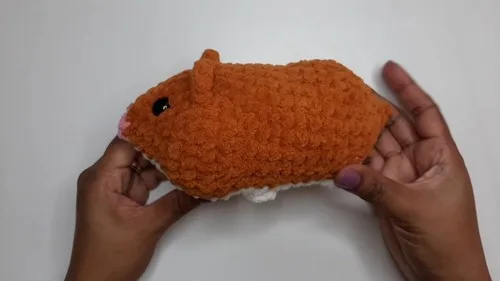
There is something unbothered about a hamster. It just sits there, round and content, cheeks full of nothing in particular. That is the energy this pattern captures, a little rust-colored lump of fluff with a white underbelly and a pink nose, built for holding rather than displaying.
Your hands will spend most of their time on single crochet and increases, but the real work is tracking color switches, especially on that small Bubblegum-to-Rust-to-White nose. You will learn to carry a yarn tail through a few stitches without it showing. Stitch markers earn their keep here.
Set it on a shelf, a windowsill, or the corner of a desk and it reads as a small, soft animal rather than a craft project. The chenille fiber catches light in a way that makes the fur look almost real. It is the kind of thing a kid picks up without being told to be careful.
- Start the nose with Bubblegum yarn in a magic ring, then switch to Rust partway through the first round.
- Work the following rounds in Rust while weaving in short sections of White for the underbelly color.
- Watch each round carefully since the color switches happen mid-round, not between rounds.
- Keep stitch markers on your first stitch of each round so you never lose track during a color change.
- Stuff the piece firmly with polyester fiberfill as you go, adding more before the opening gets too small.
- Insert the safety eyes before closing up, since they need to go in while you can still reach inside.
- Fasten off by sewing closed through the front loops of the final stitches for a neat, seamless finish.
- Weave in the last yarn tail through the body and trim it close so nothing pokes out.
On the desk
- 7 mm
Stitch shorthand
- sc — single crochet
- inc — increase
Plush chenille hamster amigurumi you can crochet
Nose
Using Bubblegum yarn:
- Round 1(6)
6 SC in magic ring Switch to Rust on the last stitch (6 stitches total)
Using Rust:
- Round 2(9)
(SC, Inc) x 2 Switch to White: (SC, Inc) x 1 Switch back to Rust (9 stitches)
- Round 3(12)
(2 SC, Inc) x 2 Switch to White: (2 SC, Inc) x 1 Switch back to Rust (12 stitches)
- Round 4(15)
(3 SC, Inc) x 2 Switch to White: (3 SC, Inc) x 1 Switch back to Rust (15 stitches)
- Round 5(18)
(4 SC, Inc) x 2 Switch to White: (4 SC, Inc) x 1 Switch back to Rust (18 stitches)
- Round 6(24)
(2 SC, Inc) x 4 Switch to White: (2 SC, Inc) x 2 Switch back to Rust (24 stitches)
- Round 7(30)
3 Inc, SC, 3 Inc Switch to White: 8 SC Switch back to Rust (30 stitches)
- Round 8(36)
(SC, Inc) x 3, 10 SC (SC, Inc) x 3 Switch to White: 8 SC Switch back to Rust (36 stitches)
More shots
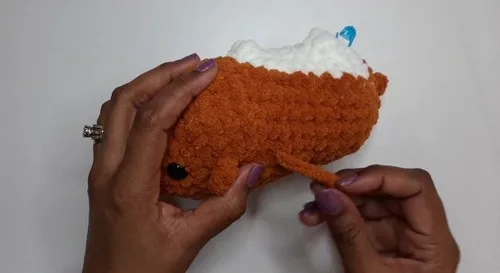
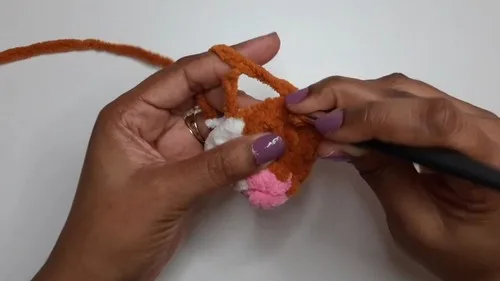
Where it goes
- A soft companion for a child's bed, small enough to tuck under one arm.
- A desk or bookshelf decoration that pairs well with other amigurumi animals in a growing collection.
- A handmade gift for a baby shower or new sibling, paired with a crochet blanket or rattle.
- A car or travel companion that rides in a bag thanks to its compact, huggable shape.
Color ideas
- Classic rust Rust for the main body and head, White for the underbelly rounds, Bubblegum for the nose rounds.
- Soft swap Swap Rust for a lighter neutral body color, keep White on the underbelly rounds, and use Bubblegum on the nose for a gentle contrast.
Care
Hand wash in cool water since chenille yarn can shed or flatten under heat and agitation.
Lay flat to air dry and reshape the body gently while damp so the fiberfill settles evenly.
Store away from direct sunlight and rough fabrics, since chenille fiber snags and fades faster than smooth yarn.
Assembly
- Step 1 Fasten off and sew closed using front loops of last 3 stitches
- Step 2 Weave in yarn tail through body and trim
Easy to get wrong
Losing track mid-round color switches
Place a stitch marker right before each color switch point so you can glance down and confirm placement instead of recounting from the start of the round.
Pulling chenille yarn too tight
Keep tension relaxed since chenille has less give than smooth yarns, and tight stitches can make the fuzzy texture look flat and pulled thin.
Closing the nose before checking eye placement
Insert the safety eyes and check their position from the front before you fasten off and sew the last three stitches closed.
Between the songs
- What makes this one fun is the nose. Switching between Bubblegum, Rust, and White within a single round, sometimes more than once, forces you to slow down and read your work instead of crocheting on autopilot. The chenille yarn adds its own quiet challenge: it is forgiving on stitch definition but less forgiving if you lose count, since the fuzzy texture hides your stitches from view. Working the underbelly in White against a Rust body means every round asks you to think ahead about where the next color needs to land. It is a small pattern with an outsized lesson in color management, and finishing the nose cleanly feels like a genuine accomplishment.
Listener questions
Why does the nose section have so many color switches?
The nose blends Bubblegum, Rust, and White within the same rounds to create a soft, blended color transition rather than hard color blocks. It is the most detailed part of the whole piece, so taking it slow pays off.
Can I use a different yarn weight than chenille?
You can, but chenille gives this hamster its soft, realistic fur look, so a smooth yarn will change the finished texture. If you switch fibers, adjust your hook size to match your tension as the materials list suggests.
When do I insert the safety eyes?
Insert them before the piece is fully stuffed and closed, while you can still reach inside to secure the backs. Doing this after closing up makes it nearly impossible to attach them properly.
How do I keep my yarn tails from showing through chenille?
Weave tails through several stitches along the inside of the body rather than pulling them straight through, since chenille's fuzzy texture hides woven ends well. A yarn needle makes this easier than trying to thread by hand.
What stitch count issues should I watch for on the nose?
Since the nose increases every round while switching colors, it is easy to lose a stitch during the color change itself. Count your stitches at the end of each round before moving to the next color switch.
Original pattern: https://crocheteverything.com/adorable-plush-crochet-hamster-amigurumi-pattern-using-chenille-yarn/
About the Author

Marisol QuinteroWho runs Crochet Obsessed, why a stitch count sits at the end of every round, how a pattern gets written here, and the things this site will never do.
More Patterns
- IntermediateNo. 01

Rose Granny Square Tote Crochet Pattern
Rose granny square tote crochet pattern made from 18 dimensional rose squares for a sturdy, romantic everyday bag.
- IntermediateNo. 02
Tropical octopus baby blanket crochet pattern with appliqués
Tropical octopus baby blanket crochet pattern: a cream filet base with coral and turquoise octopus appliqués, leaves, and…
- IntermediateNo. 03
Sunny lemon couple amigurumi crochet pattern
Sunny lemon couple amigurumi crochet pattern with embroidered slices and safety eyes for a cheerful handmade shelf pair.