- LevelIntermediate
- Time4-6 hours
- Hook6 mm
- YarnWorsted
About This Pattern
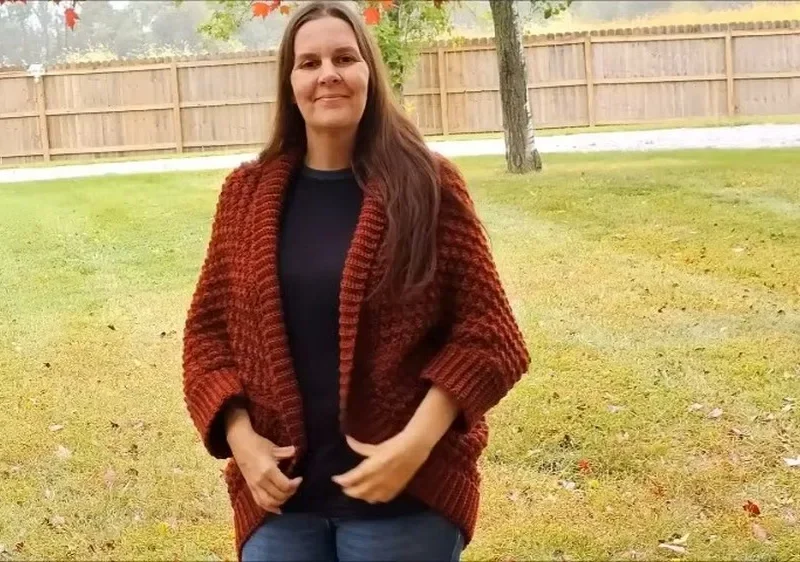
This one feels like a deep exhale. It is the kind of piece you reach for when the air turns sharp and you want something soft between you and the world. There is nothing fussy about it, just an easy drape that settles over your shoulders like a blanket that learned to be a sweater.
Your hands get a steady, repeating rhythm here, working the hdc and dc pattern row after row until the body is long enough to wrap around you. Then you shift gears for the ribbing, counting out those back-loop single crochet rows and slip stitch rows in a tight little loop. The sleeves ask for the same patience in miniature, worked flat and seamed in at the end.
Picture it hanging on a hook by the door, ready to grab on the way outside, or folded over the arm of a reading chair. It is a piece that looks lived-in from the first wear, the kind of oversized layer that makes a room feel a little more settled just by being draped across a chair back.
I think what I love most is how forgiving the shape is. There is no fitted shaping to fuss over, no gauge swatch panic, just a long rectangle built row by row until it is the length you want. That ease makes it a genuinely relaxing project, not a tense one.
- Chain a long foundation row and start building the main body with that repeating hdc, skip, sc, and dc combination.
- Keep turning and repeating the same two-row pattern until the body reaches the length you want for your size.
- Chain and build each sleeve flat as its own small rectangle, working straight rows of single crochet.
- Finish each sleeve edge with the same ribbing treatment so the cuffs match the body's texture.
- Sew both finished sleeves into the underarm openings to join them to the main body.
- Weave in every loose tail from the body, ribbing, and sleeves so nothing unravels later.
On the desk
Yarn
- James C Brett Aztec Aaron with alpaca in the color AL4 (or any other worsted weight yarn, 4 ply)
Crochet hook
- 6 mm (J hook)
Tools
- Yarn needle
- Scissors
Stitch shorthand
- ch — chain
- sc — single crochet
- hdc — half double crochet
- dc — double crochet
- sl st — slip stitch
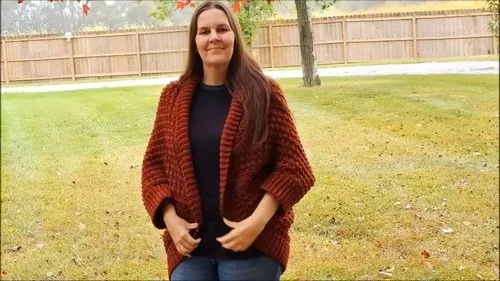
Cozy oversized cocoon cardigan crochet pattern for fall
Main Pattern
The cardigan shown is a size large/extra large.
Measurements for this size: 28 inches long from the top of the shoulder to the bottom, and the ribbing is 4 inches long.
Chain 144 stitches (or the appropriate number of stitches for your size).
- Row 1
hdc in the 3rd ch from your hook; skip 2 ch; sc and 2 dc in the next ch; repeat from to until you have 3 ch remaining; sc in the last ch.
- Row 2
and all subsequent rows: ch 2, turn; 2 dc in the first sc of the previous row; skip 2 ch; sc and 2 dc in the next sc of the previous row; repeat from to until you have 3 ch remaining; sc in the last ch.Repeat rows 2 and 3 until your cardigan is the desired length.
Ribbing
Repeat these 4 rows all the way around the cardigan, including around the sleeves.
- Row 1
ch 1, turn; sc in the back loop of each sc across the row.
- Row 2
ch 1, turn; sl st in the next 2 sc.
- Row 3
ch 1, turn; sc in the back loop of each sc across the row.
Sleeves
- Row 1
ch 13; sc in the 2nd ch from your hook; sc in each ch across the row.
- Row 2
ch 1, turn; sc in the back loop of each sc across the row.Repeat these 2 rows until the sleeves are the desired length; sl st in the first sc; cut the yarn and pull it through the last sc to secure; weave in any loose ends.
More shots
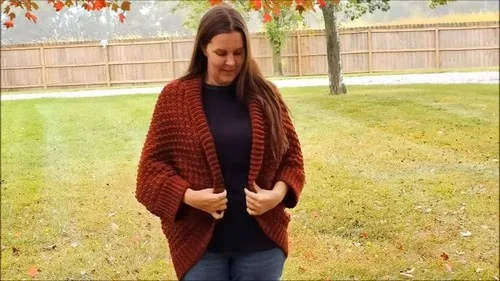
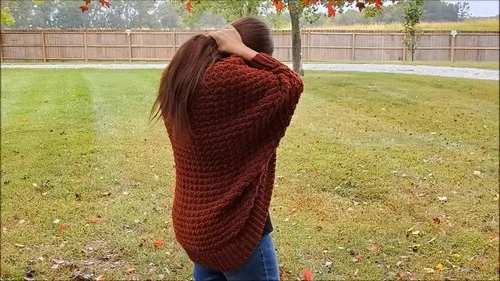
Where it goes
- Throw it over a tank top and jeans for a quick layer when the morning air cools down.
- Keep it draped over the back of your favorite reading chair for grabbing during a chilly evening.
- Pack it for travel, since it folds flat and layers easily over long-sleeve shirts or sweaters.
- Wear it over a simple dress with boots for an easy, textured outer layer that needs no buttons.
Care
Hand wash this piece in cool water with a gentle detergent, since the alpaca-blend yarn can felt or shrink with hot water and heavy agitation.
Lay it flat on a towel to dry rather than hanging it, which keeps the ribbing and body from stretching out of shape under their own weight.
Store it folded rather than on a hanger, and let it rest flat between wears so the fibers can spring back to their natural shape.
Assembly
- Step 1 Attach the sleeves to the cardigan by sewing them into the underarms.
- Step 2 Hide any remaining tails.
Easy to get wrong
Losing the hdc-dc stitch rhythm
Mark the first sc of each row with a scrap of yarn or a stitch marker so you always know where the 2-dc shell begins. This keeps the repeat lining up row after row instead of drifting.
Working into the wrong loop on ribbing
Double check you are catching only the back loop on the ribbing rows, since working into both loops flattens the texture. A quick peek at your hook position before each stitch keeps the band stretchy.
Sewing sleeves in misaligned
Pin the sleeve into the underarm opening first and check it sits evenly on both sides before you start sewing. Rushing this step is the easiest way to end up with one sleeve sitting higher than the other.
Between the songs
- What makes this cardigan satisfying is the contrast between its two textures. The main body is all openwork rhythm, that hdc-skip-sc-dc combination building a lacy, breathable fabric that looks far more complicated than it actually is to work. Then the ribbing flips everything, working into the back loop only to create that stretchy, textured band, with slip stitch rows tucked in to add structure without bulk. Working the sleeves flat and seaming them in afterward means you get to watch the whole garment take shape piece by piece, which feels more like assembly than endless repetition. By the time you are weaving in the last tail, you have practiced four genuinely different skills in one project, and that variety is what keeps it interesting from chain to finish.
Listener questions
Can I use a different yarn than the one listed?
Yes, any worsted weight, 4-ply yarn works well with the 6 mm hook called for here. Just keep in mind that a different fiber blend will change how soft and drapey the finished cardigan feels.
How do I know when the main body is long enough?
Keep repeating the two main pattern rows until the panel reaches the length you are going for before you add the ribbing. Trying the piece on as you go is the easiest way to judge this.
Do the sleeves need to match the body's stitch pattern?
No, the sleeves are worked in simple single crochet rows rather than the hdc-dc combination used in the main body. The ribbing is what ties the two pieces together visually at the cuffs and edges.
What is the ribbing actually doing structurally?
The back-loop single crochet and slip stitch rows create a snug, textured band that adds a bit of recovery and shape around the open edges. It keeps the lacier main body from looking unfinished at the hems and cuffs.
Is this a good project if I have only made simple scarves before?
It is a reasonable next step up, since the stitches themselves are basic but the shell pattern and ribbing combination ask for a bit more attention to sequence. Going slowly through the first few rows of each part should get you comfortable with the rhythm.
Original pattern: https://crocheteverything.com/crochet-easy-cocoon-cardigan-pattern-for-autumn-wear/
About the Author

Marisol QuinteroWho runs Crochet Obsessed, why a stitch count sits at the end of every round, how a pattern gets written here, and the things this site will never do.
More Patterns
- IntermediateNo. 01

Rose Granny Square Tote Crochet Pattern
Rose granny square tote crochet pattern made from 18 dimensional rose squares for a sturdy, romantic everyday bag.
- IntermediateNo. 02
Tropical octopus baby blanket crochet pattern with appliqués
Tropical octopus baby blanket crochet pattern: a cream filet base with coral and turquoise octopus appliqués, leaves, and…
- IntermediateNo. 03
Sunny lemon couple amigurumi crochet pattern
Sunny lemon couple amigurumi crochet pattern with embroidered slices and safety eyes for a cheerful handmade shelf pair.