- LevelIntermediate
- Time4-6 hours
- Hook6.0 mm
- YarnWorsted
About This Pattern
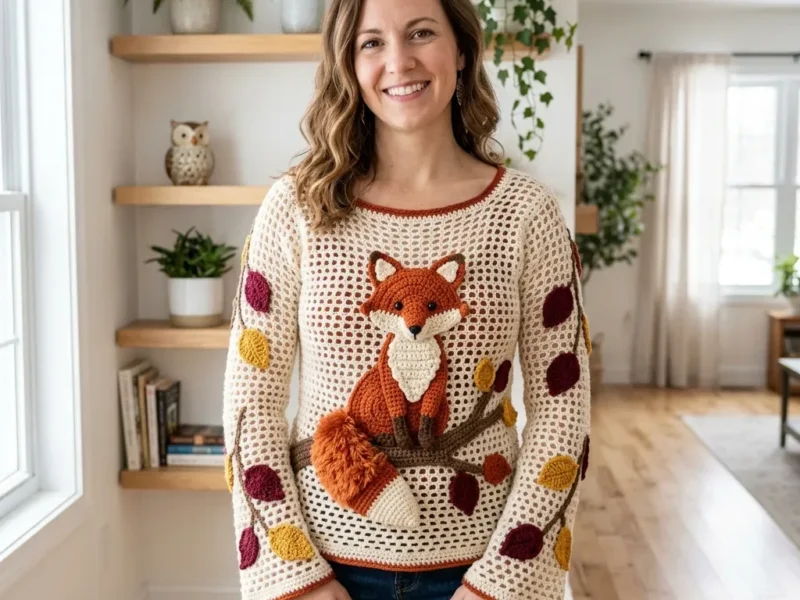
There is something quiet about this one, like the first cool morning when you finally reach for a real sweater. The cream filet mesh reads open and airy, but the fox perched on the front panel brings in all that burnt orange and rust. It feels like a walk through a thinning forest, half lace, half woodland creature.
Your hands get two very different jobs here. Most of the Back Panel and Front Panel is a steady sc-and-chain-1 rhythm, the kind of mesh you can do while listening to a podcast. Then the mood shifts for the fox and the Large Oval Leaf, where you are counting stitches around a tip, shaping a face, and sewing small pieces onto a bigger one.
Finished, this sweater is not background clothing. Hung on a hook by the door or folded on the arm of a reading chair, the cream mesh catches light and the fox stands out against it in deep rust and cream. It is the kind of piece that gets picked up first on a chilly afternoon.
- Start the Back Panel first, building the filet mesh steadily in Main Color so you get used to the sc and ch-1 rhythm.
- Work the Front Panel the same way, keeping the mesh plain since the fox will sit on top of it later.
- Crochet the fox base, body, and chest markings separately in Color A, Color B, and Color C before assembling the face.
- Shape the Large Oval Leaf by working down one side of the foundation chain and back up the other to form the pointed tip.
- Stuff the fox lightly with fiberfill so it has dimension before you sew it onto the Front Panel.
- Add loop stitches in Color G around the tail area for a soft, fluffy fox tail.
- Seam the Back and Front Panels together, leaving the top opening for the neckline as directed.
- Weave in all your ends and block the sweater flat before trying it on.
On the desk
- Main Color (MC): Cream or natural off white, worsted weight (CYCA 4), approximately 900 (950, 1050, 1150, 1250) yards / 823 (869, 960, 1052, 1143) meters
- Color A (CA): Burnt orange/rust, worsted weight, approximately 80 yards / 73 meters (for borders and fox base)
- Color B (CB): Deep rust/terracotta, worsted weight, approximately 120 yards / 110 meters (for fox body)
- Color C (CC): Cream white, worsted weight, approximately 40 yards / 37 meters (for fox chest and face markings)
- Color D (CD): Golden yellow, worsted weight, approximately 60 yards / 55 meters (for gold leaves)
- Color E (CE): Burgundy/wine, worsted weight, approximately 60 yards / 55 meters (for burgundy leaves)
- Color F (CF): Medium brown, worsted weight, approximately 50 yards / 46 meters (for branch)
- Color G (CG): Additional rust/orange for fluffy tail loops, worsted weight, approximately 40 yards / 37 meters (can use CB)
- Lion Brand Pound of Love offers excellent stitch definition for the mesh, is machine washable, and takes blocking well with steam.
- Cascade 220 Superwash provides a luxurious hand with beautiful stitch definition and drapes beautifully in the mesh structure.
- Choose any worsted weight yarn that achieves gauge. A smooth, plied yarn shows the mesh structure most clearly. Avoid fuzzy or fluffy yarns for the main body as they obscure the open mesh grid.
Hook
- US size J-10 / 6.0 mm for body mesh
Hook
- US size I-9 / 5.5 mm for borders and appliques
Tools
- Tapestry needle (blunt tip, large eye)
- Stitch markers , at least 6
- Safety eyes (black, 6 mm), 2 (optional, embroidery substitution instructions provided)
- Polyester fiberfill for fox body padding
- Blocking mats and pins
Stitch shorthand
- beg — beginning
- BLO — back loop only
- ch — chain
- ch-sp — chain space
- dc — double crochet (yarn over, insert hook, pull up loop, yarn over, pull through 2 loops, yarn over, pull through remaining 2 loops)
- FM — Filet Mesh
- hdc — half double crochet
- MC — main color (cream)
- RS — right side
- sc — single crochet (insert hook, pull up loop, yarn over, pull through both loops)
- sc2tog — single crochet two together (insert hook in first stitch, pull up loop, insert hook in next stitch, pull up loop, yarn over, pull through all 3 loops on hook)
- sk — skip
- sl st — slip stitch
- sp(s) — space(s)
- st(s) — stitch(es)
- WS — wrong side
- yo — yarn over
Autumn fox lace sweater crochet pattern
Back Panel
Checkpoint: After Row 32, the piece should measure approximately 16 inches / 40.5 cm tall and 22 inches / 56 cm wide.
Do not fasten off. Continue to the alternate back neckline approach below.
Back Neckline (Simpler Method): After Row 32, fasten off and leave the full width top edge as is. When seaming, leave the center 10 inches / 25.5 cm of the top edge open for neckline. Seam only the outer 6 inches / 15 cm on each shoulder.
The fox applique will be positioned on the front panel after completion, so no colorwork is needed in the body mesh.
- Row 1
(RS): Chain 153 (133, 153, 167, 181); Sc in 2nd ch from hook, (ch 1, sk 1 ch, sc in next ch) across, turn. (77 sc)
- Row 2
Ch 1, sc in first sc, (ch 1, sk ch-1 sp, sc in next sc) across, turn. (77 sc)
- Rows 3–32(77)
Rep Row 2. (77 sc each row)
Large Oval Leaf
- Row 1
Ch 8; Sc in 2nd ch from hook, hdc in next ch, dc in next 3 ch, hdc in next ch, 3 sc in last ch (tip), rotate, now working along underside of foundation chain: hdc in next ch, dc in next 3 ch, hdc in next ch, sc in next ch, sl st in first sc to close. (18 sts around the leaf)Fasten off leaving 12 inch tail for sewing.
Where it goes
- A layering sweater for brisk morning walks, paired with straight-leg jeans and ankle boots.
- A cozy piece for a reading nook, worn over a turtleneck with wool socks.
- A statement sweater for a farmers market trip, paired with a canvas tote and corduroy pants.
- A handmade gift for a friend who loves foxes, paired with simple gold jewelry and a wool scarf.
Color ideas
- Classic Woodland Fox Main Color fills both the Back Panel and Front Panel mesh, Color A outlines the fox base and borders, Color B shapes the fox body, Color C sets the chest and face markings, Color F forms the branch, and Color D and Color E alternate across the leaves with Color G for the tail loops.
- Burgundy-Heavy Rust Keep Main Color on the panels and Color A and Color B on the fox exactly as given, but lean on Color E for most of the leaves and use Color D sparingly for just one or two accent leaves near the branch, since the pattern notes Color G can be replaced with Color B for the tail.
Care
Hand wash the finished sweater in cool water with a mild detergent, since worsted weight yarn and the fiberfill-stuffed fox hold up better without a washing machine agitating the applique.
Lay the sweater flat on a towel to dry and reshape the Back Panel and Front Panel gently while damp, using your blocking mats and pins if the mesh needs coaxing back to size.
Store it folded rather than hung, so the weight of the fox applique does not stretch the shoulder seams over time, and keep it away from direct sunlight to protect the rust and burgundy colors.
Assembly
- Step 1 After blocking all pieces, arrange the fox on the branch in the center of your sweater front. Pin everything in place before sewing. Take your time with placement because this is the focal point of your entire garment.
- Step 2 Scatter the autumn leaves across both sleeves and the lower body, varying the colors between burgundy, gold, and additional rust tones. Refer to your reference images for inspiration on placement. The leaves look most natural when positioned at different angles.
- Step 3 The fluffy loop stitch tail is the finishing touch that brings your fox to life. Make sure those loops are pushed firmly to the right side and fluffed out after attaching.
Easy to get wrong
Losing track of the mesh count
Remember that the stitch counts given refer only to the sc stitches, not the ch-1 spaces, so count sc across the row and let the ch-1 spaces fall where they land.
Sewing the fox on before it is shaped
Stuff the fox body lightly with fiberfill first so it holds its shape, then position it on the Front Panel and sew around the edges with the tapestry needle.
Uneven loop stitch on the tail
Wrap the yarn around your index finger to the same loop size, about 1 inch, every single time so the fox tail looks consistently fluffy rather than patchy.
Between the songs
- The satisfaction here is in the contrast. The Back Panel and Front Panel are pure filet mesh, sc into ch-1 spaces, row after row, so your tension evens out and the fabric drapes the same way every time. Then the fox applique flips the script: a rust CA base, a terracotta CB body, cream CC face and chest markings, all stitched separately and layered on like a small sculpture. Stuffing the fox with fiberfill gives it real dimension instead of lying flat. The Large Oval Leaf works a tip shape in one round, hdc and dc building the rounded point, which is a nice compact lesson in shaping. By the end you have practiced plain mesh, colorwork applique, and leaf shaping in a single project.
Listener questions
Can I make this sweater in a different size than the smallest number given?
Yes, the pattern lists five sizes in the chain counts and yardage, so you just follow the numbers in parentheses that match your size throughout the Back Panel and Front Panel. The stitch count for your chosen size stays consistent row after row.
Do I have to use safety eyes on the fox?
No, the materials list notes that safety eyes are optional and gives embroidery as a substitution for the fox face. This is a nice option if the sweater is going to a household with young children.
Can I skip the separate neckline finishing method?
You can use the simpler back neckline approach described in the pattern, which just leaves the top edge open at a given center width instead of shaping a neckline during the rows. It is a good shortcut if you want to get to seaming faster.
What if I don't have Color G for the tail loops?
The materials list specifically says Color G can be substituted with Color B, so you do not need to buy an extra skein just for the tail. Using Color B there also keeps the fox's rust tones consistent.
Original pattern: https://bunnypatterns.com/autumn-fox-lace-crochet-sweater-free-pattern/
About the Author

Marisol QuinteroWho runs Crochet Obsessed, why a stitch count sits at the end of every round, how a pattern gets written here, and the things this site will never do.
More Patterns
- IntermediateNo. 01

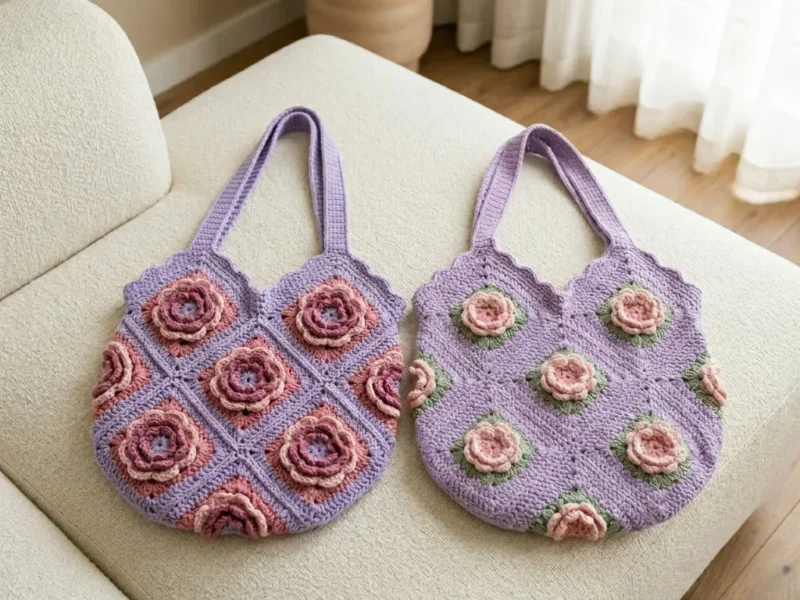
Rose Granny Square Tote Crochet Pattern
Rose granny square tote crochet pattern made from 18 dimensional rose squares for a sturdy, romantic everyday bag.
- IntermediateNo. 02
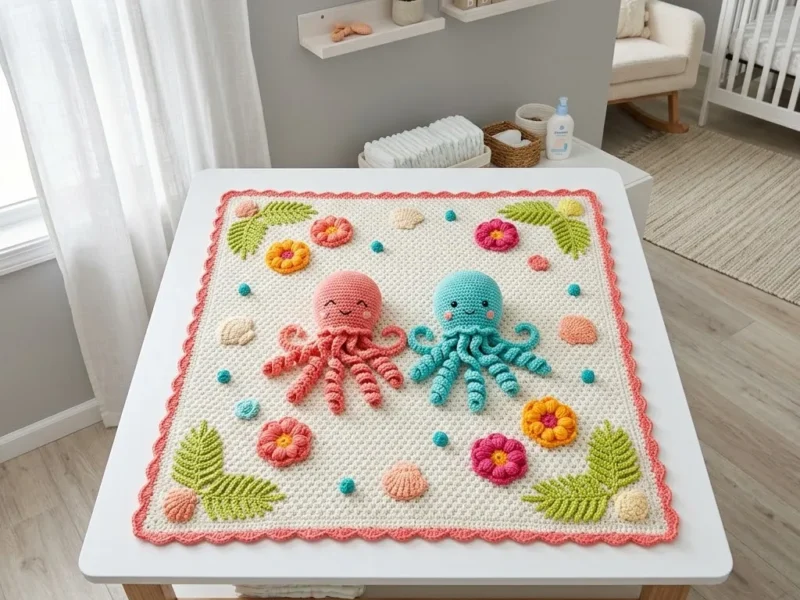
Tropical octopus baby blanket crochet pattern with appliqués
Tropical octopus baby blanket crochet pattern: a cream filet base with coral and turquoise octopus appliqués, leaves, and…
- IntermediateNo. 03
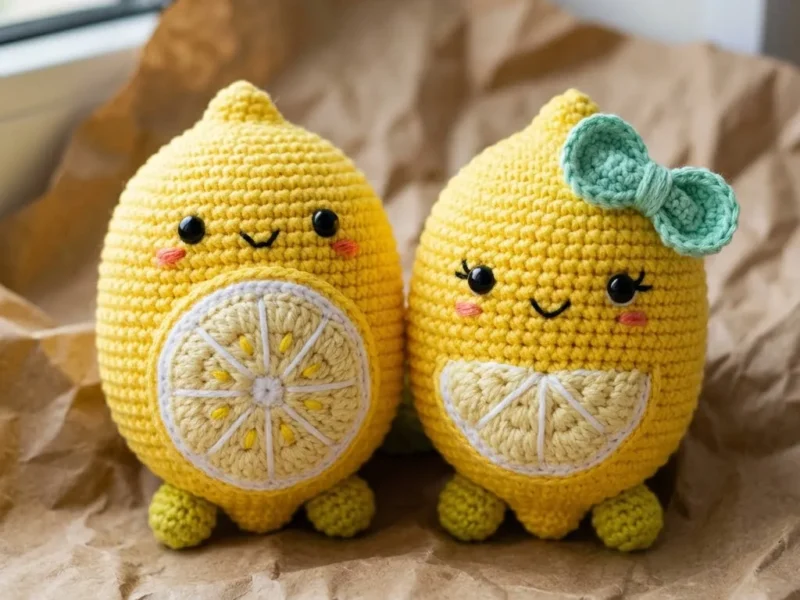
Sunny lemon couple amigurumi crochet pattern
Sunny lemon couple amigurumi crochet pattern with embroidered slices and safety eyes for a cheerful handmade shelf pair.